Skip to content

In recent years, the global pigment market has undergone a significant transformation, driven by increasing environmental regulations and a growing demand for sustainable materials. Among all pigment categories, iron oxide red1 stands out as a vital product used in construction, coatings, plastics, and ceramics. Today, manufacturers are investing heavily in developing eco-friendly iron oxide red1 solutions to meet sustainability goals without compromising performance or color quality.
Rising Demand for Sustainable Pigments
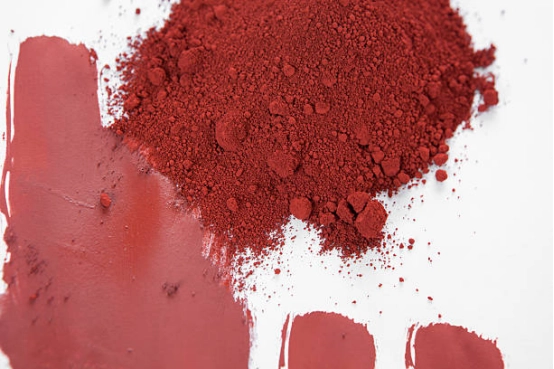
The transition toward environmentally responsible products has become a defining trend in the pigment industry. As major economies tighten restrictions on carbon emissions and waste disposal, pigment producers are rethinking traditional production processes. Iron oxide red, known chemically as Fe₂O₃, is particularly important because it is widely used as a coloring agent in cement, concrete, pavers, paints, and ceramics.
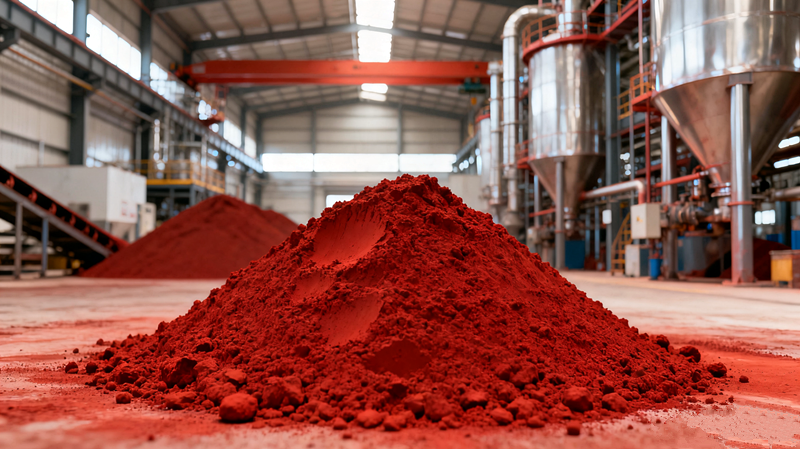
The market for iron oxide pigments has always been strong due to their stability, non-toxicity, and cost efficiency. However, traditional production methods, particularly those based on chemical synthesis and acid waste by-products, can generate environmental challenges. This has encouraged companies to pursue greener manufacturing technologies, focusing on waste reduction, recycling, and renewable feedstocks.
Innovations in Green Production Processes
Eco-friendly iron oxide red production mainly revolves around reducing the environmental footprint during synthesis. One major advancement is the adoption of precipitation and hydrothermal methods2 that minimize harmful emissions and by-products. Compared with the conventional acid-based route, these processes allow better control over particle morphology while reducing wastewater discharge.
Some manufacturers have also turned to recycling industrial by-products3 such as scrap iron and steel mill residues as raw materials for pigment synthesis. By using these waste sources, companies are able to lower resource consumption and reduce landfill waste. The result is a circular production model that contributes to both environmental protection and cost savings.

In regions like Europe and China, where environmental standards are particularly strict, the pigment industry has made remarkable progress in using closed-loop systems. These systems capture and reuse process water and energy, lowering the overall carbon footprint. As global regulations continue to evolve, these practices are expected to become the industry standard for iron oxide pigment manufacturing.
Balancing Color Quality and Environmental Goals
One of the most important challenges in developing eco-friendly iron oxide red pigments is maintaining color consistency and tinting strength. The performance of iron oxide red is evaluated based on its hue, saturation, and particle size distribution. For applications such as bricks and concrete, even minor variations in color can affect the appearance of finished products.
To address this, pigment producers have optimized their process control systems, incorporating advanced temperature regulation and pH adjustment techniques during synthesis. These improvements ensure that eco-friendly iron oxide red pigments can deliver the same deep, stable shades required by construction and coating industries.

In addition, many suppliers are investing in surface treatment technologies that improve pigment dispersibility4 and compatibility with different binders. These innovations not only enhance the visual properties of the final product but also help reduce energy consumption during mixing and application.
Environmental Regulations Driving Industry Change
The shift toward eco-friendly pigments is not just a voluntary industry initiative—it is also being reinforced by regulatory frameworks worldwide. In the European Union, the REACH Regulation mandates strict guidelines for the use and disposal of chemical substances, including pigments. Similarly, in North America and Asia, environmental agencies are imposing tougher waste treatment and emission standards for chemical manufacturers.
The shift toward eco-friendly pigments is not just a voluntary industry initiative—it is also being reinforced by regulatory frameworks worldwide. In the European Union, the REACH Regulation mandates strict guidelines for the use and disposal of chemical substances, including pigments. Similarly, in North America and Asia, environmental agencies are imposing tougher waste treatment and emission standards for chemical manufacturers.
These policies have prompted both global and regional pigment producers to reexamine their production lines. Many are introducing low-carbon synthesis technologies5, upgrading filtration systems, and improving waste management to meet compliance standards. The trend also encourages partnerships between pigment suppliers and research institutions to develop innovative, cleaner pigment formulations.
Market Outlook: Growth Through Sustainability
According to recent industry analyses, the market for eco-friendly iron oxide pigments is projected to grow steadily over the next decade. The construction sector, particularly in emerging economies, continues to be the largest consumer of iron oxide red pigments. With infrastructure projects emphasizing sustainable materials, demand for environmentally responsible colorants is expected to increase.
Furthermore, as green building certifications such as LEED and BREEAM become more popular, manufacturers are aligning their products with these standards. Eco-friendly iron oxide red pigments that are free of heavy metals and produced through low-emission processes are increasingly being specified for use in certified projects.
In addition to construction, the paint and coatings industry6 is also playing a significant role in this transition. Many coating producers are now formulating water-based paints with iron oxide red pigments that meet both environmental and performance criteria. This trend is accelerating the adoption of sustainable pigments across multiple end-use sectors.

The Role of Technology and Collaboration
The future of eco-friendly pigment development depends heavily on technological innovation and cross-industry collaboration. Digital tools such as real-time process monitoring, data analytics, and AI-based control systems are helping manufacturers fine-tune production efficiency and minimize waste.
Meanwhile, collaborations between pigment suppliers, construction material producers, and environmental organizations are encouraging the development of standardized sustainability metrics. These shared frameworks make it easier for downstream users to verify the environmental credentials of the pigments they purchase.
At the same time, end-users—particularly in construction and coatings—are becoming more aware of the long-term benefits of sustainable pigments. Choosing eco-friendly iron oxide red solutions not only helps companies reduce their environmental impact but also enhances brand reputation and customer trust.
Looking Ahead
The move toward eco-friendly iron oxide red solutions represents a major step in the pigment industry’s path toward sustainability. As environmental awareness continues to grow, businesses are realizing that green innovation is not only a regulatory necessity but also a competitive advantage.
In the coming years, manufacturers that can successfully balance high-quality pigment performance with environmentally responsible production will be best positioned to capture new opportunities in the global market. The continued evolution of eco-friendly technologies will likely redefine how pigments are produced, used, and perceived—setting new standards for the industry’s future.
-
Exploring this link will provide insights into the diverse uses of iron oxide red, enhancing your understanding of its importance in multiple sectors. ↩ ↩
-
Explore this link to understand how these methods enhance sustainability in pigment production. ↩
-
Discover the benefits of recycling in reducing waste and promoting sustainability in manufacturing. ↩
-
Learn about the importance of pigment dispersibility in improving product performance and visual appeal. ↩
-
Exploring low-carbon synthesis technologies reveals innovative methods that reduce environmental impact in pigment manufacturing. ↩
-
Discover how the paint and coatings industry is transitioning to sustainable solutions, impacting environmental standards. ↩