Skip to content
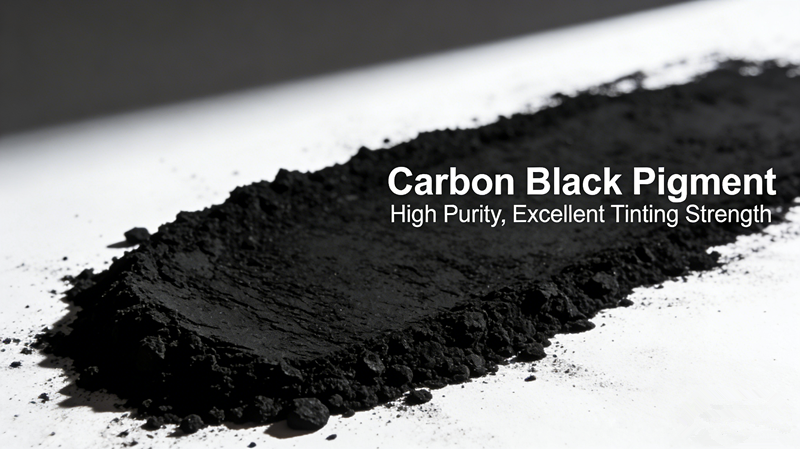
Carbon black is one of the most important industrial materials used in rubber, plastics, coatings, and inks. It is not just a colorant. It plays a key role in improving strength, durability, UV resistance, and conductivity.
For buyers and traders, choosing the right carbon black is not simple. There are many grades, specifications, and performance factors. A wrong choice can increase cost or reduce product quality.
This article explains how to select the right carbon black based on your business needs.
What Is Carbon Black and Why It Matters
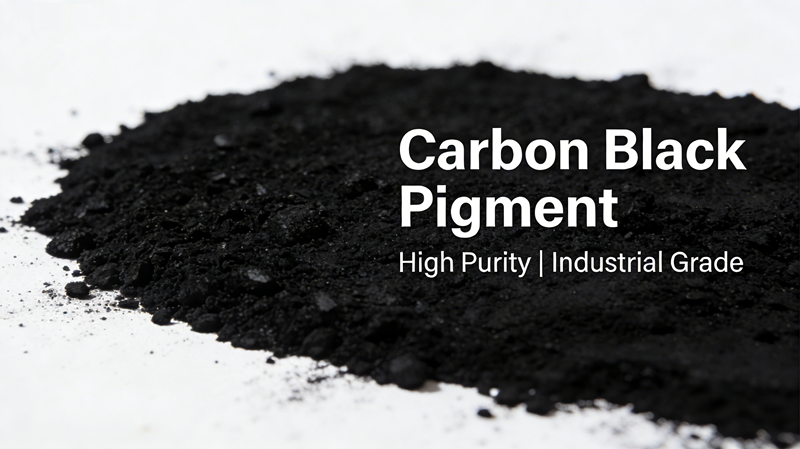
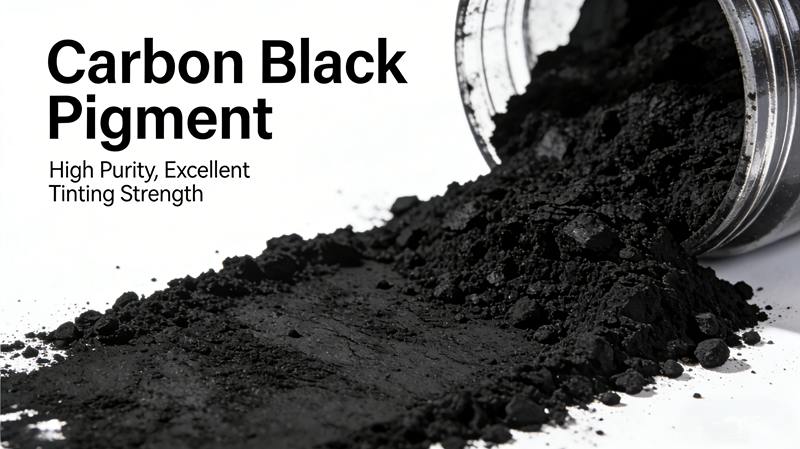
Carbon black is a fine black powder produced by incomplete combustion of hydrocarbons. It is widely used as a reinforcing filler and pigment.
Its biggest value comes from performance improvement. For example:
- In rubber, it increases strength and wear resistance
- In plastics, it provides UV protection
- In coatings, it improves color depth and stability
Adding carbon black can significantly enhance mechanical properties. In rubber applications, it can increase tensile strength and abrasion resistance compared to unfilled materials.
Step 1: Understand Your Application
The first step is to define where and how you will use carbon black.
Different industries require different properties:
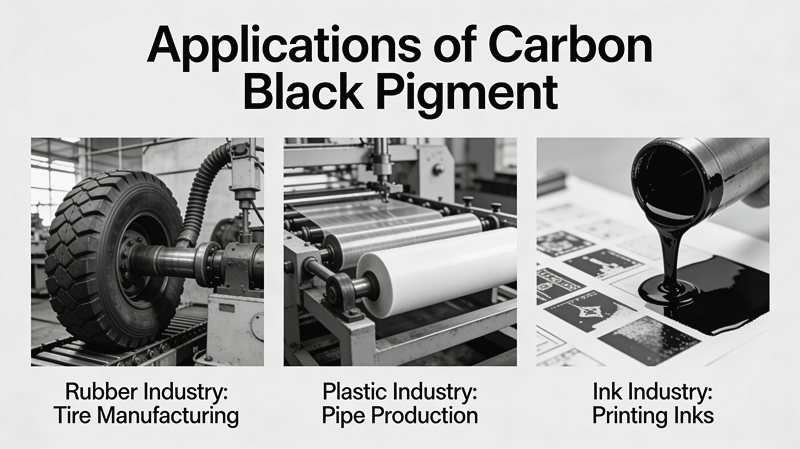
Rubber Industry
- Focus: strength, abrasion resistance
- Common grades: N220, N330
- Typical use: tires, belts, hoses
Plastics Industry
- Focus: UV resistance, dispersion
- Common grades: N550, N660
Coatings and Inks
- Focus: color strength, jetness, dispersion
- Special pigment grades required
Carbon black is not universal. Each application needs a specific balance of properties.
Step 2: Know the Key Properties
To choose the right grade, you need to understand the core technical parameters.
Particle Size
Particle size is one of the most important factors.
- Small particles → higher strength, better UV resistance
- Large particles → easier processing, lower cost
Smaller particles have higher surface area, which improves reinforcement and durability.
Structure (DBP Absorption)
Structure refers to how particles are connected.
- High structure → better conductivity, higher viscosity
- Low structure → easier processing
This affects mixing, extrusion, and final product performance.
Surface Area
Surface area determines interaction with the material.
- High surface area → stronger reinforcement
- Low surface area → softer and more flexible products
Surface Chemistry
Surface chemistry affects compatibility.
- Oxidized carbon black → better dispersion in coatings
- Untreated carbon black → more stable in rubber
Surface treatment can improve wetting and performance in inks and coatings.
Step 3: Choose the Right ASTM Grade
Carbon black is standardized using ASTM classification.
Common grades include:
N220
- High reinforcement
- Used in high-performance tires
- Excellent abrasion resistance
N330
- Balanced performance
- Widely used general-purpose grade
- Suitable for most rubber products
N550
- Medium reinforcement
- Better flexibility
- Used in tire sidewalls and extrusions
N660
- Low reinforcement
- Lower cost
- Used in non-critical rubber products
Each grade is designed for a specific performance level. For example, N330 is popular because it offers a good balance of strength and processability.
Step 4: Match Performance with Cost
Cost is always a key factor in B2B purchasing.
Higher-performance carbon black usually means:
- Smaller particle size
- Higher surface area
- Higher price
But not every product needs top performance.
Example:
- High-end tires → N220
- Standard rubber goods → N330
- Low-cost products → N660
Choosing a higher grade than needed increases cost without adding value.
Step 5: Consider Special Types
Not all carbon black is furnace black.
There are also specialty types:
- Thermal black → large particles, low reinforcement
- Acetylene black → high conductivity
- Pigment carbon black → high jetness for coatings
These types are used in specific industries such as electronics, batteries, and high-end coatings.
Step 6: Evaluate Processing Requirements
Processing performance is often overlooked.
Some carbon blacks:
- Are difficult to disperse
- Increase mixing time
- Raise production cost
For coatings and inks, good dispersion is critical. Surface-treated carbon black can improve processing efficiency.
Step 7: Check Quality Consistency
In global trade, consistency is as important as performance.
Buyers should check:
- ASTM test data
- Batch consistency
- Supplier quality control
Standard tests include:
- Surface area (BET)
- Oil absorption (DBP)
- pH and ash content
These parameters ensure stable performance across shipments.
Step 8: Think About Long-Term Performance
Carbon black also affects product lifespan.
Key benefits include:
- UV protection
- Weather resistance
- Color stability
Carbon black absorbs UV radiation and protects materials from degradation.
This is especially important for:
- Outdoor plastics
- Construction materials
- Automotive parts
Common Mistakes Buyers Should Avoid
- Choosing based only on price
- Ignoring dispersion and processing
- Using the same grade for all applications
- Not checking ASTM specifications
A small mistake in selection can lead to production issues or customer complaints.
Final Thoughts
Choosing the right carbon black is not just a technical decision. It is a business decision.
The right grade can:
- Improve product quality
- Reduce production cost
- Increase customer satisfaction
The key is to match application + performance + cost.
For most buyers, starting with common grades like N330 or N550 is a practical approach. Then adjust based on specific requirements.
FAQ
1. What is the most commonly used carbon black grade?
N330 is widely used because it offers a balance of strength, cost, and processing.
2. How does particle size affect performance?
Smaller particle size improves strength and UV resistance but increases cost and viscosity.
3. Can one grade be used for all applications?
No. Different industries require different properties.
4. Is higher surface area always better?
Not always. It improves reinforcement but may reduce processability.