Skip to content
Iron oxide red is an used inorganic pigment for concrete, coatings and plastics. It gives red, brick red, terracotta and red brown colors and has good resistance, to light weather, heat and alkaline conditions.
It can be added to cement based materials spread in coatings and mixed into polymers using compounding or masterbatch production. Every use however needs pigment properties.
What Is Iron Oxide Red?
Iron oxide red is mostly made up of oxide Fe₂O₃. It is also called red iron oxide or Pigment Red.
It is appreciated for color stability, weather resistance, alkali resistance and ability to work with industrial materials. The colors it produces are not as bright as some reds but are perfect, for natural red, earth tone and red brown colors.
Synthetic iron oxide red is commonly used because the shade, tinting strength, particle size and purity can be controlled in a way.
How Is Iron Oxide Red Used in Concrete?
Integral Coloring of Concrete Products
Iron oxide red is added directly to cement, aggregate, or the complete dry mix. The pigment is distributed throughout the material, creating integral color rather than a surface only finish.
Common applications include:
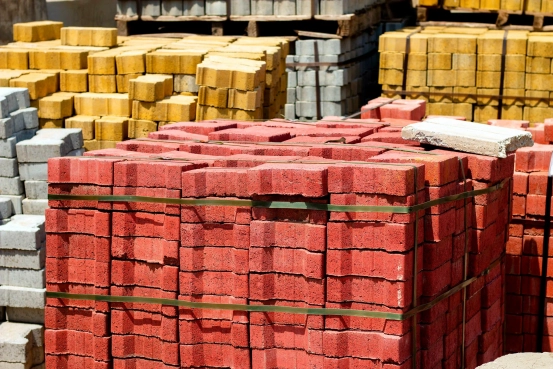
- Concrete paving blocks
- Interlocking pavers
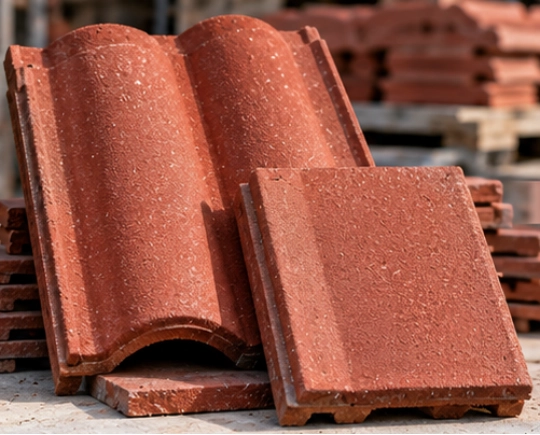
- Roof tiles
- Colored mortar
- Precast concrete
- Decorative flooring
- Artificial stone
- Terrazzo products
Integral coloring is useful for products exposed to wear because minor abrasion does not immediately remove the color.
Why It Performs Well in Cement Based Materials
Iron oxide red does a job of resisting the high alkalinity of cement and lime. This means it keeps its color when it is outside. That is why iron oxide red is used much in paving and roofing and landscaping and architectural concrete.
The final shade depends on the pigment grade, cement color, aggregate, water cement ratio, curing method, surface finish, and dosage. Grey cement normally gives darker colors, while white cement produces cleaner shades.
Color approval should be based on trials using the actual cement and aggregate.
Mixing and Dosage Considerations
Dosage is normally calculated as a percentage of cement or total binder weight. Many producers begin testing at approximately 3% to 5%, then adjust according to the required shade and pigment strength.
The pigment should be mixed evenly before excessive water is added. Dry blending it with cement and fine aggregate can reduce streaks, spots, and batch variation.
Accurate weighing, moisture control, and sufficient mixing time are essential for repeatable color.
How Is Iron Oxide Red Used in Coatings and Paints?
Common Coating Applications
Iron oxide red is used in:
- Architectural paints
- Exterior wall coatings
- Industrial primers
- Protective coatings
- Powder coatings
- Wood finishes
- Decorative paints
- General industrial coatings
It is particularly suitable for oxide red, terracotta, and red brown shades.
What Does the Pigment Add to a Coating?
In coating applications, red iron oxide gives color, opacity, hiding power, lightfastness, and weather resistance to the coating.
Good dispersibility is crucial for maximizing tinting strength and achieving a uniform surface finish. It is suitable for use in both water-based and solvent-based systems.
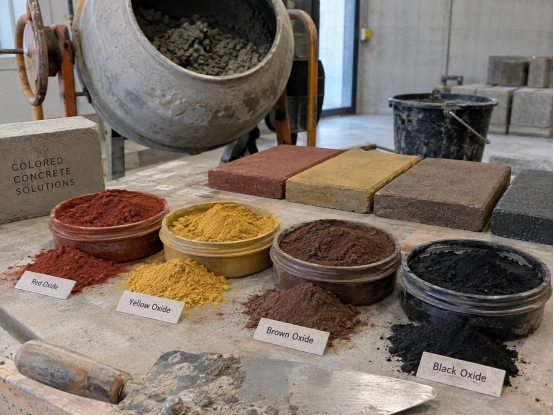
Furthermore, it can be blended with yellow iron oxide, black iron oxide, titanium dioxide, and other pigments to create a wide range of shades, including browns, beiges, dark reds, and earth tones.
Important Formulation Factors
Important parameters include:
- Particle size
- Dispersibility
- Oil absorption
- Tinting strength
- Sieve residue
- Shade consistency
- Binder compatibility
Fine, easily dispersed grades are usually preferred for smooth or higher gloss coatings. Oil absorption can also influence viscosity and binder demand.
The pigment should be tested in the actual acrylic, alkyd, epoxy, polyurethane, or powder coating system.
How Is Iron Oxide Red Used in Plastics?
Plastic Products and Processing Methods
Iron oxide red can be introduced through dry blending, compounding, extrusion, pigment concentrates, or color masterbatch.
Typical applications include:
- PVC pipes and profiles
- Polyethylene products
- Polypropylene components
- Plastic flooring
- Roofing materials
- Wood plastic composites
- Outdoor molded parts
- Industrial plastic products
Uniform feeding and dispersion help prevent streaks, specks, and color variation.
Benefits in Plastic Coloration
Iron oxide red has heat stability for many common polymer processes. It also gives lightfastness, weather resistance and low migration.
These features make it right, for plastics, construction products and materials that need stable earth tone colors. As an inorganic pigment it is usually less likely to bleed than soluble dyes.
What Plastic Manufacturers Should Check
Plastic processors should review:
- Processing temperature
- Heat stability
- Moisture content
- Particle size
- Dispersibility
- Sieve residue
- Polymer compatibility
- Regulatory documentation
A grade suitable for PVC may not perform the same way in a higher temperature polymer. Film, fiber, masterbatch, and fine screen extrusion may also require tighter dispersion and residue control.
Concrete vs. Coatings vs. Plastics: What Changes?
| Application | Main Purpose | Most Important Pigment Properties |
| Concrete | Integral and durable coloration | Alkali resistance, tinting strength, dosage consistency |
| Coatings | Color, opacity, and exterior durability | Dispersibility, particle size, oil absorption, weather resistance |
| Plastics | Stable color during processing and use | Heat stability, low moisture, migration resistance, dispersion |
Concrete producers focus on alkali resistance and consistent mixing. Coating manufacturers require controlled dispersion and surface quality. Plastic processors place greater emphasis on heat stability and uniform distribution.
How Do You Choose the Right Iron Oxide Red Grade?
The correct grade should be selected according to the application and processing conditions.
Key questions include:
- What shade and tinting strength are required?
- Is the product for indoor or outdoor use?
- What processing temperature is involved?
- How will the pigment be dispersed?
- What moisture and residue limits apply?
- How tight is the batch color tolerance?
- Which documents are required?
Pigments should be compared by performance rather than price per kilogram alone. Tinting strength, dosage, dispersion time, waste, and production stability all affect total coloring cost.
Why Work With XT Pigment?
XT Pigment provides iron oxide pigments for construction materials, paints, coatings, plastics and other industrial uses.
XT Pigment has than 25 years of experience, in the industry. XT Pigment helps customers with selection, samples, technical data, packaging options and recommendations based on application.
XT Pigment can suggest an iron oxide grade depending on the cement type, coating system, polymer, processing temperature, desired shade and production needs.
Conclusion: Find the Right Iron Oxide Red for Your Application
Iron oxide red gives color in concrete. It adds opacity and protection from weather in coatings. It also keeps color when heated in plastics. The best type to use depends on the material you are working with. It also depends on how you process the material. The best type to use also depends on what performance you need.
Contact XT Pigment to discuss your concrete, coating, or plastic formulation and request a suitable iron oxide red grade, technical data, or product sample.
Frequently Asked Questions
Q: Is iron oxide red suitable for outdoor applications?
Yes. Iron oxide red is a choice for outdoor applications. It has resistance, to light and weathering. It is often used in concrete, coatings and plastic products. The final durability of iron oxide red also depends on the formulation, processing quality, substrate and exposure conditions.
Q: Can the same iron oxide red grade be used in concrete, coatings, and plastics?
Some general purpose grades can be used in several industries. However, coatings may require finer dispersion and controlled oil absorption, while plastics may require higher heat stability and lower moisture. Concrete grades are mainly selected for alkali resistance, tinting strength, and economical dosage.