Skip to content

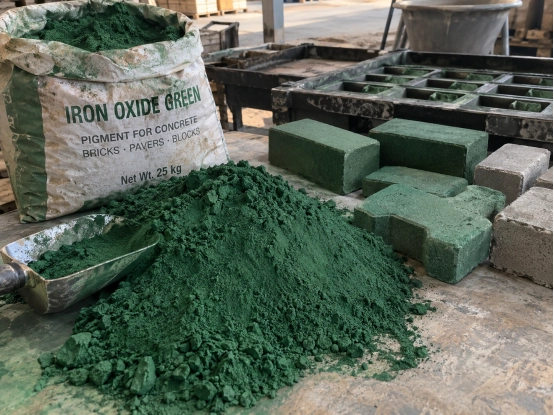
Green iron oxide sounds like the name of one chemical, but buyers should not treat it as a complete material identity. Depending on the supplier and grade, a commercial green inorganic pigment may be based on chromium oxide, a blend of several pigments, or a calcined mixed-metal oxide. Those routes can differ in heat tolerance, tinting behavior, dispersion, and documentation. The practical answer is therefore grade-specific: confirm what the product is made from before approving it for production.

Does Green Iron Oxide Have One Chemical Formula?
No single formula safely describes every product sold as green iron oxide. The main synthetic iron oxide color families are commonly identified as red, yellow, and black. Green iron oxide products may sit next to that family in a supplier's range while using a different green inorganic pigment chemistry or a controlled blend.
XT Pigment lists a current product code and application overview for its green inorganic pigment grade. A buyer comparing that grade with another supplier's material should still match the Color Index designation, CAS number, stated pigment type, and supporting documents. Two powders that look similar in a photograph can behave differently in the customer's binder, cement mix, or polymer.
Why Is the Trade Name Not Enough for Approval?
A trade name describes how a product is marketed, not every fact needed for engineering or compliance. One green iron oxide grade may be a single inorganic pigment. Another may be a preparation that combines colorants with filler. A third may be a complex oxide made by high-temperature reaction. These materials should not share a purchase specification merely because the words green and oxide appear on both labels.
The safety data sheet supports hazard, handling, and regulatory review, but it may not disclose a complete formulation. Buyers should cross-check it with the TDS, Color Index and CAS identifiers when applicable, the supplier's written grade declaration, and the COA. A controlled application trial then tests whether the documented green iron oxide grade performs as required. If the supplier uses a proprietary blend, the buyer may not receive a full recipe, but the evidence set should still provide enough identity and performance information to assess the intended use.
How Does Composition Change Pigment Performance?
Composition sets the performance envelope, while particle properties and manufacturing control shape the result within that envelope. A chromium oxide green grade, a blended green preparation, and a calcined mixed-metal oxide should not be assumed to have the same maximum processing temperature, chemical resistance, opacity, undertone, or dispersion demand. A limit reported for one material cannot be transferred to another green iron oxide product with a similar shade.
The broader inorganic pigment range is a useful starting point for color selection. Final approval, however, should use grade-specific evidence. For coatings, buyers need to know how the pigment wets, disperses, and develops color in the chosen binder. For plastics, the grade must tolerate the actual resin and processing window. For cement products, it must be evaluated in the alkaline mix and curing conditions used by the plant.

How Should Buyers Compare Green Pigment Grades?
When comparing green iron oxide grades, begin with a physical target rather than a color name alone. Keep an approved panel, molded plaque, concrete specimen, or drawdown that represents the required green. Record whether the target is full shade or a tint because a powder can appear close in masstone but separate noticeably after reduction with white pigment or incorporation into the finished material.
Run every candidate through the same preparation. The pigment loading, binder or resin, cement source, dispersion equipment, mixing time, film thickness, plaque thickness, curing, and measurement method should remain constant. When a variable changes with the sample, the test cannot show whether the pigment or the method caused the difference.
Visual review should be paired with an agreed instrumental color method when tight lot control matters. The purchase specification can name the reference sample, preparation procedure, measurement geometry, and acceptance tolerance. It should also state which non-color properties are critical, such as dispersibility, residue, moisture, oil absorption, or heat stability, but only when the supplier provides an applicable test method.
Where Can a Verified Green Pigment Grade Be Used?
Green inorganic pigments may be evaluated for concrete products, pavers, tiles, mortar, or other cement-bound systems. The plant trial should use the production cement, aggregate, water control, mixing sequence, compaction, finish, and curing method because each can affect the visible green.
In paints and coating formulations, the pigment must be compatible with the binder and dispersion process, and a laboratory drawdown in the actual formulation remains necessary. Plastics add resin color, additives, processing temperature, residence time, and part thickness. For plastic coloring applications, a molded trial confirms whether the grade works in the intended process.
What Should the Supplier Confirm Before a Bulk Order?
The request for quotation should identify the exact grade code, pigment family, Color Index and CAS information when applicable, delivery form, and intended application. Ask for the current TDS and SDS, an example COA, packaging details, and the lot-control properties that will appear on future shipments. If regulatory or customer restrictions apply, state the market and end use so the supplier can answer against the correct requirement.
Sample approval should also be connected to commercial supply. Record the sample lot, supplier site, test method, and approved result. Ask how formulation, raw-material, or production-site changes are communicated. A buyer can request current grade documents and a representative sample, then release a bulk order only after the application trial and paperwork agree.
FAQs
Q: Is green iron oxide the same as chromium oxide green?
A: Not always. Chromium oxide green is one defined green inorganic pigment chemistry, while products sold under broader green oxide or green iron oxide wording may use a blend or another mixed-metal oxide. Check the grade's Color Index, CAS information, SDS, and TDS.
Q: Can green iron oxide be used in concrete?
A: A documented grade may be suitable for concrete, but the trade name alone is not enough. Confirm compatibility with cementitious materials and test the pigment in the plant's actual mix, curing method, and color-control procedure.
Q: Why do green pigment samples differ between suppliers?
A: The samples may use different pigment chemistries, component ratios, particle properties, or tinting strengths. They may also have been photographed or tested in different media. Compare them with one controlled application method and an agreed physical reference.