Skip to content
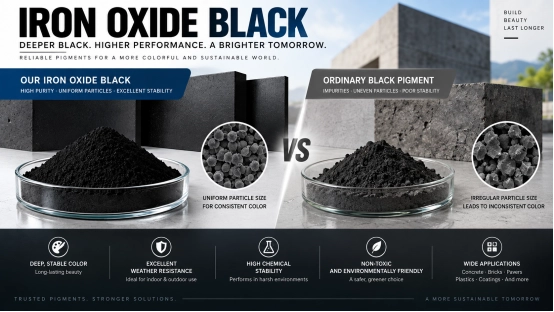
Black iron oxide price depends on more than the amount shown beside one kilogram or metric ton. A useful quotation reflects the pigment grade, the form supplied, the quantity, packaging, inspection needs, trade terms, and the route to the buyer's plant. Two offers that appear far apart may cover different products or different portions of the landed cost. Industrial buyers get a more reliable comparison by defining the application first and then asking every supplier to quote the same requirement.
Why Can Black Iron Oxide Quotes Differ So Much?
Black iron oxide is not a single interchangeable commodity in every formulation. Suppliers may offer different shades, strength targets, particle characteristics, moisture limits, or quality-control tolerances. One quote may cover standard powder, another a granulated form, and a third a customized match.
The delivery term may stop at the factory, include export loading, or extend to the destination port. Until those differences are normalized, the lowest unit price does not identify the lowest usable cost.
How Do Grade and Specification Affect Black Iron Oxide Price?
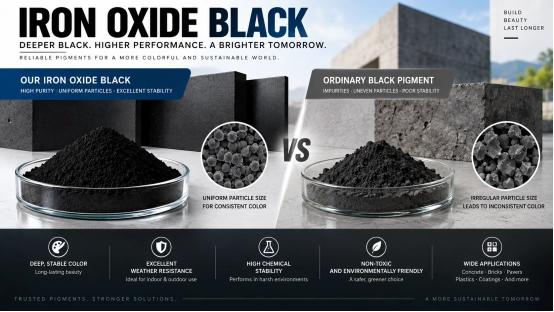
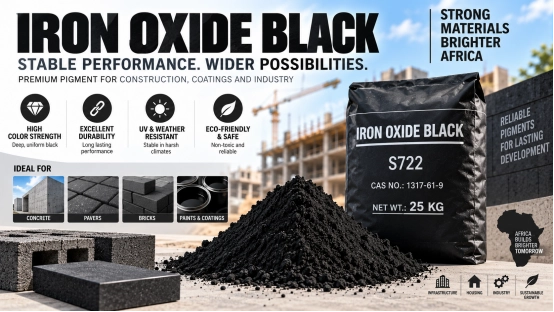
The first price driver is the product itself. XT Pigment's iron oxide black grades include supplier-specific codes 318, 330, and 722. A code should never be treated as a universal specification because another producer may use the same number differently.
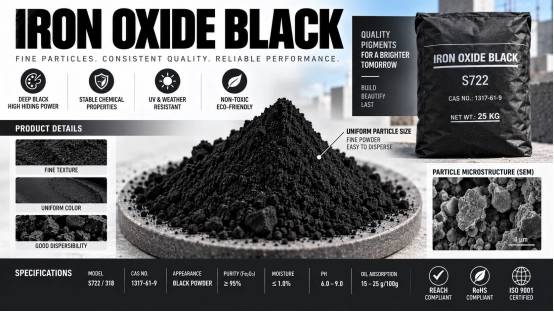
Buyers should compare the approved shade, masstone and reduced color, tinting strength, moisture, sieve residue, oil absorption, and any application-specific limits on the same test basis. These properties help determine whether two offers describe equivalent material.
Tighter tolerances or a custom color standard can require more production control, testing, segregation, or blending. That work may raise the quoted price, but it can also reduce the risk of shade corrections and rejected batches. A standard construction grade and a carefully matched coating grade therefore should not be compared only by pigment chemistry. The more useful question is whether each offer can reproduce the approved result in the buyer's actual process.
Does Powder or Granular Form Change the Real Cost?
Physical form can change both the quotation and the cost of using the material. Powder may be the familiar choice for manual or conventional dosing. Granules can support cleaner handling and controlled feeding in suitable equipment, but they are a processed form and may be priced differently.
XT Pigment presents powder and granular options within its industrial iron oxide pigment range. The correct comparison includes unloading, storage, dust control, dosing accuracy, mixing time, and waste.
A cheaper powder can become more expensive if a plant loses material, spends more labor on cleanup, or struggles with repeatable feeding. A granular product is not automatically better either. It must break down and disperse correctly in the intended mixer and cycle.
How Do Order Size and Packaging Influence a Quote?
Order volume affects how production, testing, packing, and export handling are spread across the shipment. A trial order, a mixed-color container, and a recurring full-container order create different operating costs. Larger quantities may support a lower unit price, but the discount matters only when demand, shelf management, and cash flow justify the inventory.
Packaging also changes the comparison. Bag size, liner, palletization, labels, private branding, and jumbo-bag handling should be stated in the request. Custom packaging can add cost, while packaging suited to the plant may reduce damage, moisture exposure, and handling time. Buyers should confirm whether pallet charges, export marks, and loading materials are included instead of assuming every quotation uses the same packing basis.
Why Do Freight and Trade Terms Change the Landed Price?
An Ex Works price, Free on Board (FOB), and Cost, Insurance and Freight (CIF) cover different responsibilities. Destination charges, customs clearance, inland transport, duties, taxes, insurance, and bank costs may remain outside the supplier's figure, depending on the chosen term.
Freight can also change with port choice, route, container availability, fuel costs, and shipment timing. This is why an online price range rarely predicts the final amount delivered to a specific plant.
Convert each offer to the same currency, quantity unit, Incoterm, destination, packaging, and payment basis. Record the quote validity date as well. A clear comparison separates pigment value from logistics so the procurement team can see whether a difference comes from product quality or from the route used to deliver it.
How Should Buyers Compare the Cost of Usable Color?
Purchase price is only one part of pigment economics. A black pigment must reach the approved shade at a practical addition rate and disperse within the plant's normal process. Actual addition rate and process fit therefore belong in the buying decision.
The base material, water content, binder, aggregate, mixing energy, and curing or drying conditions can all affect the visible result. This is especially important in construction material applications, where a small lab sample may look different from a production paver or block.
Run candidate grades against the same control formula and color target. Record the amount used, mixing conditions, finished shade, rejects, cleanup, and any process adjustment. This turns a price-per-kilogram comparison into a cost-per-acceptable-batch comparison. It also prevents a stronger or more consistent pigment from appearing expensive simply because the quotation sheet ignores how much material the process actually needs.
What Should a Quote Request Include?
A comparable request identifies the application, target shade or approved sample, annual and first-order quantity, powder or granular form, required tests, packaging, destination, and preferred trade term. It should also state the process conditions that could affect color or dispersion. When the supplier knows the real requirement, it can recommend a candidate grade and separate standard costs from optional customization.
Ask for a current technical data sheet, representative sample, batch document expectations, production lead time, quote validity, and a clear list of inclusions and exclusions. Sending those details through the supplier's contact page makes it easier to receive a quotation that procurement, quality, and production can evaluate on the same basis.
FAQs
Q: What is the average black iron oxide price per kilogram?
A: There is no dependable universal average for a specific order. Grade, quantity, packaging, origin, trade term, destination, and market timing all change the result. Request current quotations against one written specification and compare them at the same landed-cost boundary.
Q: Is bulk black iron oxide always cheaper than a small order?
A: The unit price may fall as order size increases, but total economics also include inventory, financing, storage, handling, and the risk of buying an unapproved grade. Qualify a sample first, then choose a volume that matches consumption and supply needs.
Q: Why is one black iron oxide powder price higher than another?
A: The offers may differ in shade, strength, consistency, particle characteristics, testing, packaging, service, or delivery scope. Compare technical documents and production trials before treating the difference as a supplier margin. The higher quote may cover a tighter requirement or more of the landed cost.