Skip to content

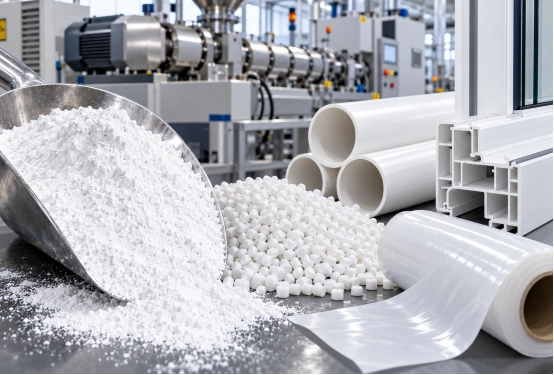
Most inquires regarding Titanium Dioxide begin with the simple question, “What grade do I need?” Where will the part be used? What are the processing requirements for the part on the production line? A clean white PVC window profile and a clean white PE masterbatch are required in both cases. However, each has unique formulation and processing requirements.
When selecting a titanium dioxide for use in plastics it is necessary to consider the resin to be used and the finished goods application. Whiteness, opacity, dispersion, surface treatment and process window all need to be considered when selecting from the various titanium dioxide pigments available in the market place and evaluating potential supply options.
Direct Answer: How to Choose Titanium Dioxide for Plastics
Start with the polymer and then work towards the end part. Define the desired appearance in conjunction with the desired properties of the part. Check the technical data of the candidate grade, and see if the surface treatment of the grade is suitable for the respective resin system. “Plastic grade” does not necessarily mean that the grade is suitable for a PVC compound or masterbatch.
Conduct a controlled trial using the same formulation and processing conditions as you expect to use in production. A formulation that looks bright in a jar may perform differently after it has been compounded or extruded. The only test that really matters is this one.
Match Titanium Dioxide to the Plastic Application
Starting from the application is better than starting from a general description of the grades for the different product types. Each product type has its own set of questions.
PVC Pipes, Profiles, and Rigid Components
For PVC pipes, window profiles and other rigid parts the intended use of the product has to be taken into account. An indoor part and an outdoor part can have a different appearance and have to withstand different weathering. The process of extrusion also has to be taken into account. A grade meeting the color in a lab sample has to meet the color in the processing of the compound and in the finished part.
PE and PP Masterbatch
For PE or PP masterbatch, the carrier and the let-down ratio of the customer have to be checked. How does the candidate disperse in the carrier? And does it also work in the end product at the appropriate use concentration, even if it looks uniform on its own as masterbatch and yet forms specks after dilution with a different polymer?
Films, Injection-Molded Parts, and Other Products
A thin film cannot afford variations in color that a thick film leaf can. An injection-molded part is of a different thickness and has different surface requirements than a plaque. Test to the requirements of your finished product – color, opacity, finish. A thick test plaque may not reveal problems that occur with thin films.
Compare the Properties That Matter in Plastic-Grade TiO₂
A data sheet may narrow down the selections that meet the criteria of a part but the data sheet alone will not make a parts decision. Review the data sheet with the formulation and part requirements.
Rutile vs. Anatase
The refractive index of rutile is generally higher than that of anatase and scatters light strongly. However, higher light scattering by no means guarantees the optimal visual effects in all kinds of plastic materials. Surface treatment, dispersion, filling and compatibility with the polymer all have to be taken into account. The relevant data for such crystals should be obtained from the supplier for the specific grade.
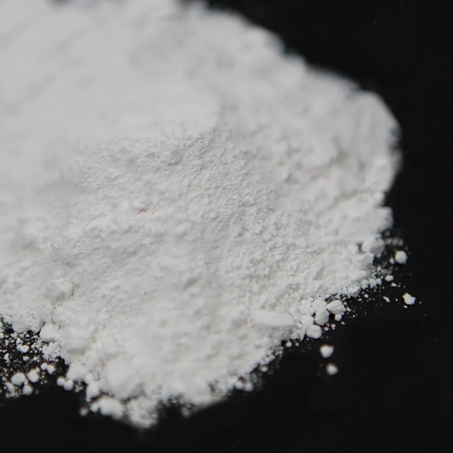
Surface Treatment and Polymer Compatibility
The surface treatment of pigments can affect their wettability and dispersibility in polymer systems. It is therefore sensible to check what surface treatment a grade has received and whether the supplier recommends it for a particular resin. Recommendations for use of a pigment in one application do not automatically imply their suitability for use in other applications.
Opacity, Whiteness, Undertone, and Tinting Strength
When comparing optical results in the same resin, samples should be of the same thickness and loaded in the same way. A white sample can have different undertones and look different from a colored part. Check the test method and sample preparation used for any figures shown.
Dispersion and Particle Quality
Lineside clues for agglomerates in parts are often pale streaks or small clusters of specks in otherwise featureless areas. Look at both the pigment data and process for possible causes of this type of defect. The same general approach to de-agglomeration in coatings parts would apply, but then need to be tested as a plastic melt for the specific coating parts of interest. See notes on titanium dioxide dispersion in coatings for related problems in different matrices.
PVC vs. Masterbatch: What Changes in Grade Selection?
Grade decisions for pigments depend on the end use material and where the pigment is added in the manufacturing process. Use this as a framework for your supplier questions and for determining the appropriate sample trials.
| Selection factor | PVC products | Plastic masterbatch |
|---|---|---|
| Starting point | Product type and end-use conditions | Carrier resin and customer application |
| Processing review | Compound formulation and extrusion conditions | Compounding conditions and let-down ratio |
| Sample evaluation | Test in the target PVC formulation | Test in the carrier and intended end-use resin |
| Decision basis | Finished-part requirements and trial results | Dispersion and appearance after dilution |
Carry out the masterbatch trial with the intended let-down ratio. Test the PVC compound under the same processing conditions as in production. Define in advance what constitutes a “pass”.
How to Qualify a Candidate Grade Before Production
A small well-controlled trial is worth more than a heap of separate lab studies. Keep the comparison fair.
Define a Control Formulation
Use a current grade or a stable reference formulation. Note the resin lot #, any additives, pigment load, and all process parameters. Without a control, it is difficult to ascertain whether any changes observed are a result of the TiO₂ or some other component in the mix.
Change One Variable at a Time
Use the test resin and additive package, and keep the temperature profile and through-put as close as possible to normal production. Run test TiO₂ grades against the control.
Evaluate the Final Part
Check the properties that matter for the end use. These may include color, opacity, surface appearance and dispersion. A screen test can spot a problem early. It should not replace a check on the actual finished product.
What Buyers Should Request From a TiO₂ Supplier
A clear request for samples helps the supplier pick the right one. Specify polymer, end product and processing method.
The technical data sheet and safety data sheet.
A certificate of analysis for the supplied batch.
The intended application and surface treatment for the grade of interest.
Sample identification capable of being linked to the respective trial and subsequently ordered.
Conclusion: Build the Specification Around the End Product
The useful grade is the one that works in your resin, process and finished part. Define those conditions before requesting samples. Then compare candidates against a control and record the results. To discuss a specific application, send us your resin and end-use requirements.
Frequently Asked Questions
Is Rutile or Anatase TiO₂ Better for PVC?
Rutile is usually compared when opacity and outdoor exposure are important. While there is an optimal choice, this depends greatly on the grade and the PVC formulation used in the target product. Compare relevant samples.
Can the Same TiO₂ Grade Be Used in PVC and Masterbatch?
Yes, but don’t assume the same behavior. The carrier resin, the additives, the processing can all be different. Try the grade in the intended application before standardizing on it.
Which Properties Matter Most in TiO₂ for Masterbatch?
Assess carrier resin, let-down ratio, dispersion, color and opacity of end product.
How Does Surface Treatment Affect TiO₂ Dispersion in Plastics?
This property can also affect the wetting of the additive by the resin system. Check with your supplier for grade specific information and verify in your formulation.
How Should Buyers Compare TiO₂ Price for Plastic Applications?
Compare cost at required loading to ensure part meets specification. Lowest price/kg does not necessarily mean lowest cost part/kg.