Skip to content

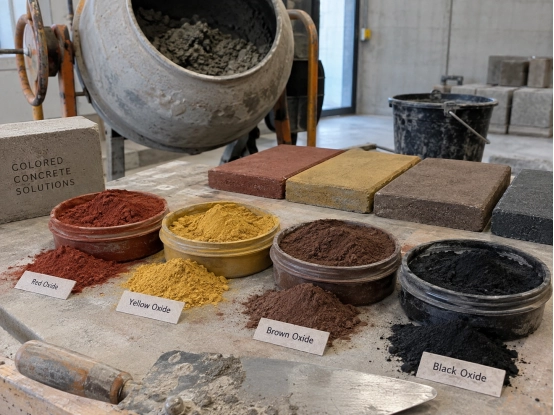
Immediately after casting, the color of colored concrete often appears darker or uneven, a state that differs from its appearance after curing. This color variation typically stems from surface moisture loss and the time required for the cement matrix to achieve optical stability, rather than from pigment loss.
Should persistent color discrepancies or batch to batch inconsistencies occur, the cement, aggregates, mix proportions, dispersion, finishing techniques, and curing procedures should be examined. The same logic applies when evaluating iron oxide red pigments for paving blocks, precast units, and ready mix products.
Why Colored Concrete Changes Shade After Curing
A wet concrete surface normally appears darker because water fills pores and changes how light travels through the cement paste. As the surface dries, the pores contain more air, light scatters differently, and the apparent color becomes lighter or less saturated. Hydration also changes the microstructure around the pigment particles. These effects can make a cured sample look different even when the pigment chemistry and dosage are unchanged.
The useful distinction is between a uniform wet to dry transition and a new, uneven color. A consistent shift across a correctly mixed panel is often normal. Sharp bands, cloudy patches, or a difference that remains after matched samples are dry may point to variable moisture, cement, aggregate, dispersion, or finishing. The cured reference should be the approval standard; fresh demolded color is only a process observation.
Which Curing Factors Change Concrete Appearance?
Several variables can alter the appearance of colored concrete without changing the pigment grade.
How Does Surface Moisture Affect Shade?
Surface moisture is the first variable to rule out. A panel that dries from the outside inward can show a darker center and lighter perimeter for hours or days. A covered area, a shaded edge, or a different demolding time can create the same visual pattern. Comparing one damp piece with one dry piece makes the pigment look inconsistent when the matrix condition is different.
How Does Cement Hydration Change Color?
Cement hydration changes both pore structure and the background behind the pigment. The rate depends on cement chemistry, water to cement ratio, temperature, humidity, and the time at which the sample is viewed. Two samples with the same pigment percentage may not have the same appearance if one has retained more surface water.
How Do Finishing and Surface Texture Matter?
Finishing can expose or cover different amounts of fine aggregate. Extra water at the surface may create a paste rich layer that looks lighter after drying, while aggressive finishing can bring aggregate closer to the surface and reduce apparent color strength. Laitance or a thin deposit can also mask the intended shade until the surface condition changes.
How Do Temperature and Moisture History Interact?
Curing temperature and moisture history influence drying rate and hydration together. A warm, windy environment can dry one face quickly while another remains damp, while a sealed or humid cure can delay the transition. These conditions do not automatically indicate a pigment defect, but they make uncontrolled comparisons unreliable.
How Can Surface Deposits Mimic Fading?
Efflorescence and other surface deposits deserve separate attention. A pale film may look like pigment fading even though it is located at the surface. If the change is localized, compare surface texture, moisture state, and deposit pattern before changing dosage.
When the color difference remains after samples reach the same age and dry state, curing alone is less likely to be the complete explanation. At that point, review the mix and batching variables together.
How Pigment, Cement, and Aggregate Interact
Iron oxide pigment colors the cementitious matrix rather than operating as an isolated paint film. Cement sets the background, aggregate affects texture and lightness, and the pigment's undertone influences the final appearance. Gray and lighter cements can therefore produce different cured shades at the same dosage. Aggregate grading and exposure add further variation.
Dosage should be compared on a defined basis, usually as a percentage of cementitious material for cement products. If one trial is calculated against cement mass and another against total mix weight, the numbers are not directly comparable. Dispersion also matters: agglomerated pigment can produce weak spots or dark specks even when the average dosage is correct.
| Variable | What It Changes | What to Compare |
| Cement color and source | Background brightness and undertone | Same cement source and lot where possible |
| Aggregate color and exposure | Texture, light scatter, and apparent saturation | Same grading, moisture, and finishing |
| Pigment grade | Hue, strength, and particle behavior | Technical data and matched trial samples |
| Dosage basis | Effective color concentration | Percentage of cementitious material |
| Mixing sequence | Dispersion and local shade uniformity | Addition point, mixing time, and batch size |
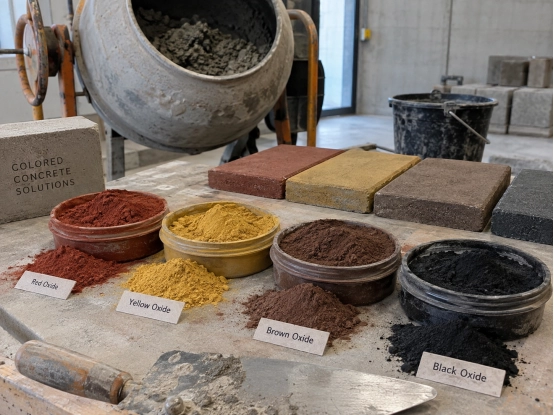
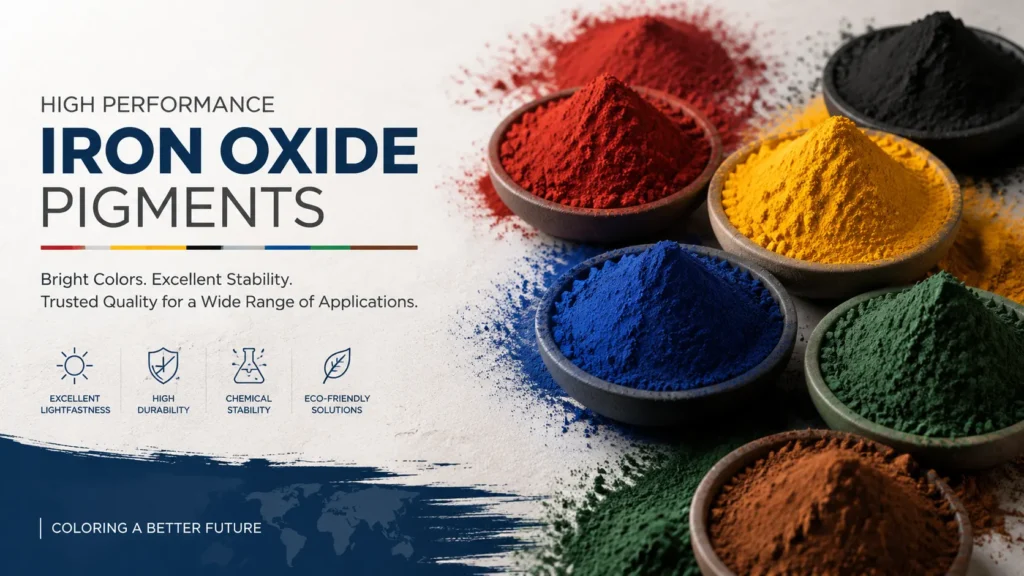
Color families can respond differently to the matrix. Red, yellow, and black grades each have their own undertone and strength characteristics. Reviewing the relevant iron oxide yellow or iron oxide black specification is more useful when the cement, aggregate, and curing details are recorded beside the sample.
How Does Batch Consistency Reveal a Shade Difference?
Before changing a formula, compare like with like. Use samples made with the same cementitious mass, water to cement ratio, aggregate moisture, pigment percentage, mixing sequence, surface texture, cure, age, and viewing light. Let both samples reach the same dry condition. If possible, measure color under a consistent light source rather than relying on a phone photograph or a sample viewed beside a wet reference.
Consider an illustrative example: two panels use 10 kg of cementitious material and 0.5 kg of pigment, equal to a 5% dosage. Panel A is inspected after a humid cure while Panel B is inspected after a dry cure. A darker A panel does not demonstrate a pigment difference because the dosage is identical but matrix moisture is not. Repeat the comparison at the same age and dry state before reviewing pigment lot, dispersion, weighing accuracy, cement source, or aggregate condition.
This approach protects purchasing decisions: a lower cost pigment may look acceptable in a wet trial yet miss the cured reference, while a suitable grade can appear wrong under uncontrolled comparison. Use construction materials as the application context when documenting the finished product.
FAQ
The following questions address common edge cases when a cured color does not match the first visual target.
Can Wet Concrete Be Used to Approve a Final Color?
No. Surface water darkens the cement matrix and changes apparent saturation. Approve against samples with the same age, moisture condition, finish, and viewing light. A wet to dry shift can be normal; a persistent difference between matched dry samples deserves investigation.
Does a Cement Color Change Affect the Pigment Shade?
Yes. Cement supplies the background that the pigment modifies. Gray, white, and differently sourced cements can produce different brightness and undertone at the same dosage. If the source or lot changes, retain a cured reference before assuming the pigment grade changed.
Is Pigment Dosage Based on Cement or Total Mix Weight?
For cementitious coloring, dosage is normally compared on a defined cementitious basis. Changing from cement weight to total mix weight changes the effective concentration and can create a false impression of supplier inconsistency. Record the basis, cementitious mass, and actual weighed pigment for every trial.
Can Outdoor Exposure Be Confused with a Curing Color Change?
Yes. Early moisture variation or a surface deposit can change appearance within days, while sunlight and weathering act over a longer period. Compare age matched, dry samples first. If the difference develops only after extended exposure, evaluate the exposure history and surface condition separately from the original curing color.
Specify a Stable Color Result
A useful color review starts with process detail that reproduces the comparison. Send the cement type and source, aggregate and moisture, water to cement ratio, pigment grade and dosage basis, mixing sequence, curing method, sample age, surface finish, and target reference. Photos help when lighting and dry condition match; a retained panel is better for close comparison.
For a formulation or sourcing review, send us your mix details so the pigment can be considered in the full cementitious system. XT Pigment's iron oxide range is presented for construction and industrial coloring, while the final shade depends on your materials and process. A controlled cured sample gives a stronger basis for selecting a stable result.