Skip to content
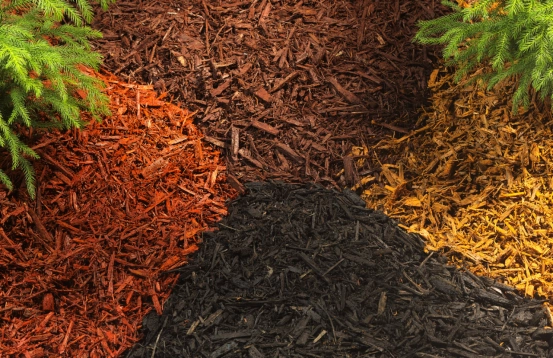
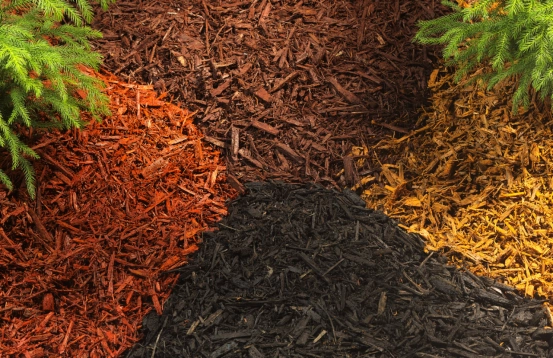
Ferric oxide red performs well in demanding color applications because its shade comes from a stable inorganic crystal rather than a dye dissolved in the material. Suitable grades resist sunlight, alkaline cement, outdoor weather, processing heat and bleeding. Ferric oxide red therefore offers excellent inherent color durability when the grade, dosage and dispersion method fit the real service environment.
What High Durability Means for Ferric Oxide Red
"Durable" needs a test condition. For an exterior paver, it may mean resistance to ultraviolet light, rain, alkaline cement and wet-dry cycles. An industrial primer adds chemical exposure and binder compatibility. A plastic compound adds processing temperature, residence time and migration risk.
Five checks matter most: lightfastness, weather resistance, chemical or alkali resistance, heat stability and resistance to bleeding. Batch consistency belongs on the list too. A changing undertone can still create rework even when outdoor durability is good.
Why Ferric Oxide Red Holds Its Color
Industrial ferric oxide red is generally alpha-Fe2O3, also known as hematite or Pigment Red 101. Its insoluble particles remain dispersed through cement, coating binder or polymer instead of dissolving into the material. This stable structure is less vulnerable to ultraviolet breakdown than many organic red colorants.
Chemistry does not select the grade. Particle size affects undertone, hiding power and dispersion; oil absorption changes coating binder demand; moisture and coarse residue can disturb feeding or leave specks. Two Fe2O3 grades may therefore behave differently on the same line.
Where Its Durability Matters Most
Outdoor Concrete and Precast Products
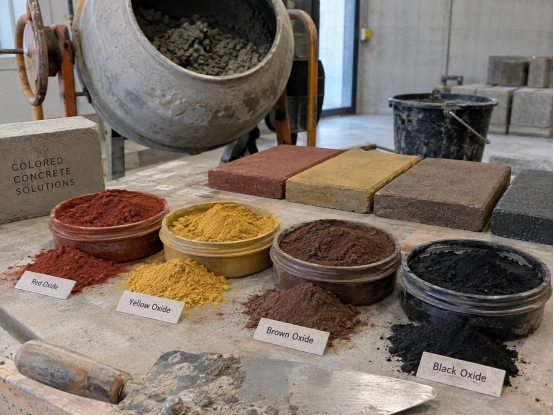
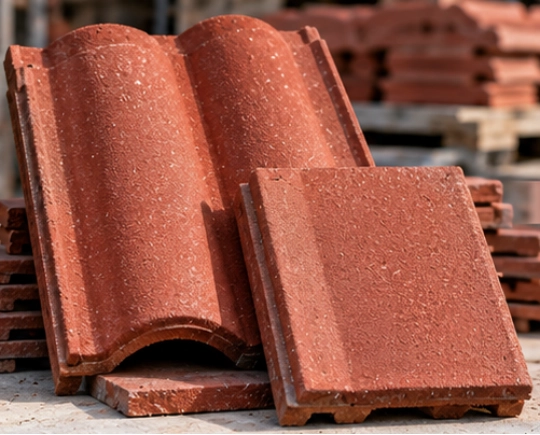
Fresh cement is strongly alkaline; exterior concrete later faces sun, rain and abrasion. Ferric oxide red handles the alkaline environment well and can color the full body of pavers, roof tiles, blocks and mortar. The current ASTM C979/C979M specification includes checks for alkali resistance, light resistance, curing stability and shipment color match.
Cement color, aggregate, water content, mixing and curing still influence the visible red, while efflorescence may temporarily mask it. Buyers comparing ferric oxide red grades should trial them in the real mix. In automated plants, iron oxide red granules can improve dosing repeatability and reduce dust without changing the intended color performance.
Exterior and Industrial Coatings
In a coating, the pigment may remain stable while the surrounding film deteriorates. Chalking, poor adhesion or water penetration can make a red surface look faded, so outdoor durability must be evaluated in the complete formula.
Agglomerates may also cause seeds, streaks, weak tint and uneven gloss. A fine grade can improve smoothness but may raise dispersant or binder demand. Run drawdowns in the actual acrylic, alkyd or epoxy system, then compare color and gloss after full cure. A strong binder cannot rescue poor dispersion.
Plastics and Rubber Under Process Heat
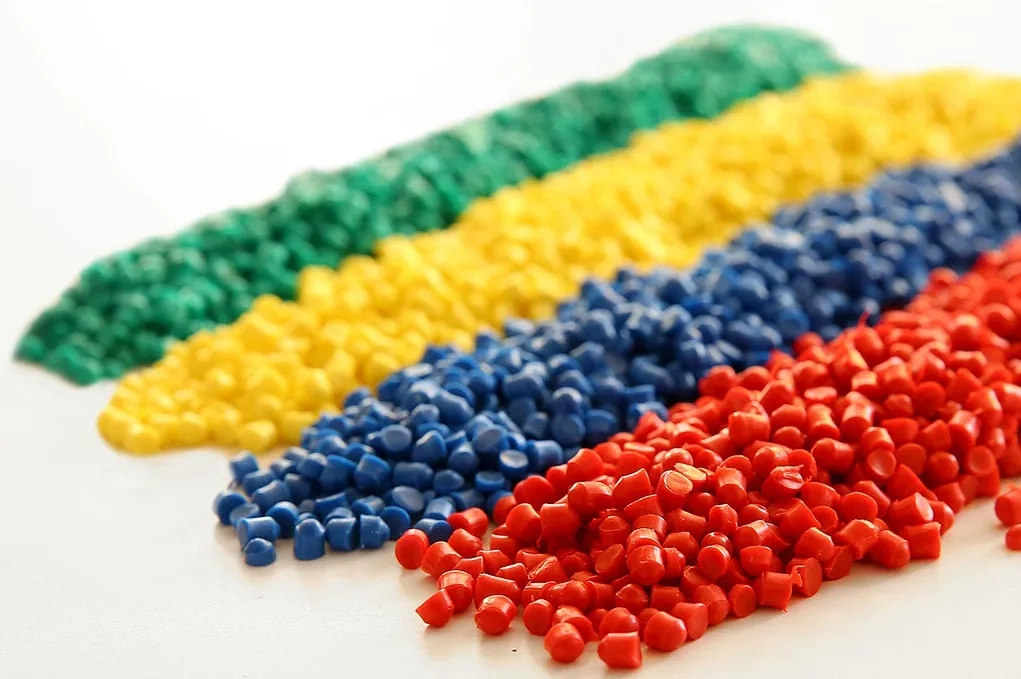
Ferric oxide red is useful in profiles, masterbatch and molded parts because it does not dissolve into the polymer and generally resists migration. Its hematite structure also tolerates heat better than hydrated yellow iron oxide. Research on industrial iron oxides describes hematite as the most thermodynamically stable common oxide pigment, but that is not a universal processing guarantee.
The limit depends on grade, polymer, carrier, residence time and atmosphere. A short heat exposure is not the same as a long extrusion run, and plasticizers can alter migration behavior. Test at normal line temperature and shear, then inspect cooled parts for shade drift, streaks and plate-out. Heat claims should state their conditions.
What Ferric Oxide Red Cannot Fix by Itself
Pigment is one part of a durable system. It cannot stop a weak binder from chalking, poorly cured concrete from wearing, or an unsuitable polymer from oxidizing. High purity also does not guarantee easy dispersion in every mixer or resin.
During failure analysis, compare exposed material with an unexposed control, then examine the binder, substrate, dosage and process record. Changing pigment before locating the cause may only move the problem to the next batch.
How Buyers Should Qualify a Durable Grade
Define the Exposure
Start with service conditions, not a color name. State the substrate, target shade, outdoor or chemical exposure, maximum temperature and dwell time. List market-specific documentation before sampling.
Compare Production-Relevant Data
Compare masstone and reduced shade, tinting strength, particle size or sieve residue, moisture, water-soluble matter and oil absorption. For coatings, ASTM D3721 identifies core properties including iron oxide content, moisture, coarse particles, pH, mass color and tinting strength.
Run a Representative Trial
Finish with a production-representative trial using normal raw materials, equipment and cycle time. Record the conditions, compare against a retained control and keep the approved sample for future deliveries. A durability claim is useful only when it can be repeated.
How We Approach Grade Selection at XT Pigment
At XT Pigment, we begin with the application rather than assuming one red suits every plant. Our industrial iron oxide pigments include powder and granular options for construction, coatings, plastics and rubber. We review the matrix, shade, feeding method and exposure before recommending a grade.
We have manufactured iron oxide pigments since 1999 and check color, tinting strength, particle behavior and batch consistency. Our technical guidance identifies Red 110, 130 and 190 as heat-resistant options, but the usable limit must come from grade-specific data and the customer's exposure conditions. A sample in the real formulation is more valuable than a broad temperature label.
For a new project, send us the application, target color, process temperature and current problem. We can recommend a trial grade and review the result before a bulk order.
Conclusion
Ferric oxide red is a strong choice where color must tolerate sunlight, weather, alkalinity, heat or migration risk. Its chemistry provides the stable foundation. Reliable performance comes from matching the commercial grade to the matrix and proving it under production conditions.
Frequently Asked Questions
Q:Does Ferric Oxide Red Fade Outdoors?
A:Ferric oxide red has very good inherent light and weather stability, so the pigment itself is slow to fade. The visible surface may still change if a coating chalks, concrete wears or deposits form. Test the complete product, not the pigment alone.
Q:What Temperature Can Ferric Oxide Red Withstand?
A:There is no single limit for every grade and process. XT Pigment treats Red 110, 130 and 190 as heat-resistant options, but the TDS, exposure time, atmosphere, polymer or binder and required color tolerance must be included in the qualification test.
Q:How Can Buyers Compare Durability Between Suppliers?
A:Ask each supplier to test against the same color reference and provide comparable data for tinting strength, moisture, residue, oil absorption and relevant heat, light or alkali resistance. Run both samples in the same formulation and keep the approved result as the control for future shipments.