Introduction: Why Carbon Black Grade Matters in Rubber Compounds
At the mill, a black crumb in the sheet is hard to ignore. On the tire, uneven wear is harder to explain. And at the hose die? A wavering edge can stop the whole conversation. Carbon black N220 vs N330 vs N550 for rubber compounds comes down to the part you're trying to rescue. Don't choose from the bag price alone. Put the failed sample on the bench. Look at it. What changed?
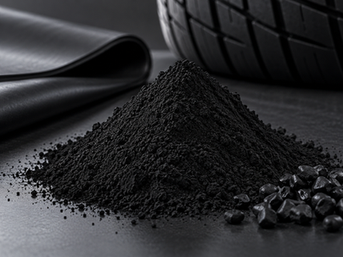
N220 vs N330 vs N550: Quick Comparison
|
Grade |
ASTM family |
Iodine absorption |
Trial focus |
|---|---|---|---|
|
N220 |
ISAF |
121 ± 5 g/kg |
Wear and reinforcement |
|
N330 |
HAF |
86 ± 2 g/kg |
General compound baseline |
|
N550 |
FEF |
43 ± 5 g/kg |
Hose or profile extrusion |
Compare the figures in the carbon black grade table. TDS midpoints: 121 and 43. Ratio, roughly 2.8. Iodine only. Nothing about mileage. Cure both mixes before judging.
What Makes Carbon Black Grades Different?
Iodine number: surface-area clue. DBP? A different clue, around aggregate structure. After that, the mill tells you more than another row of figures. Pull the sheet and look at the cut edge. Smooth? Speckled? Mark the sample. You want to catch dispersion trouble before that compound goes to cure.
N220 Carbon Black: High Reinforcement for Demanding Rubber Applications
Key Properties of N220
N220 has the highest iodine reading here: 121 ± 5 g/kg. A wear complaint? Put it on the trial sheet. More surface can bring stronger reinforcement; the stock may also need extra attention at the mill. Watch the stock at the rolls. Cut edge check: any black crumbs? Stop and check dispersion.
When Should You Choose N220?
Quarry route. Coarse stone. A truck tread comes back with a chewed shoulder; the middle is still serviceable. Set N220 beside the current black in a lab batch. Keep the polymer and loading the same. Leave the cure settings in place. Note the mixer torque. Write down the discharge temperature. Use one abrasion and tear method for both cured pieces. For tire context, consider carbon black's role in tire manufacturing when shaping the trial. If mixing gets ugly, pause.
N330 Carbon Black: A Balanced Choice for General-Purpose Rubber Compounds
N330 Performance and Processing Characteristics
Already running N330? Keep a batch sheet from a steady run. Its mix and cure are the control. Hold those conditions when you try another grade. Change both at once and the cause disappears.
Common Applications of N330 in Rubber Manufacturing
Tire mixes use N330. So do molded mats and vibration mounts. Take a coupon from two separate batches. One clean tensile result looks good on paper; check whether the following mix comes out the same.
N550 Carbon Black: For Extrusion and Selected Industrial Rubber Products
Key Characteristics of N550
On the TDS, N550 reads 43 ± 5 g/kg for iodine absorption, below N220 and N330. That points to less surface area. That lower reading can fit an extrusion job. When stock drags at the extruder, flow and target hardness come into sharper focus. Pull the lot's TDS. Set it beside the cured-part specification.
Where N550 Performs Well
At a hose line, watch the strip as it leaves the die. Does the profile hold? Check the cured piece too. Hoses and profiles are common N550 carbon black applications; some tire parts may fit. A clean run is encouraging. Measure the finished section anyway. The die only shows today's shape.
N220 vs N330 vs N550: Performance and Processing Differences
Tread wear puts N220 on the bench. With a general compound, N330 is the known quantity. A troublesome hose profile puts N550 in the conversation. SBR and EPDM may rank the grades differently.
Pencil beside the mixer. Batch time and temperature go on the sheet. If a grade adds a little time on every run, add it up over a month. Now put the cured pieces side by side. Same test method. If the line scraps it, the lab win was thin.
How to Choose the Right Carbon Black for Your Rubber Application
|
Rubber application |
Grade to evaluate |
Check the trial |
|---|---|---|
|
High-wear tread |
N220 |
Abrasion and dispersion |
|
General rubber goods |
N330 |
Balance and repeatability |
|
Hose or profile |
N550 |
Die behavior and cured size |
|
Special part |
Depends on the formula |
Service conditions |
What failed? A seal flexing through every shift may need fatigue life more than hardness. Natural rubber and EPDM won't answer the same way. Check the mixer capacity before you pick a loading. Can it disperse the black? That is part of grade selection.
For a fair swap, change the black only. Loading and cure stay at the old settings. Both samples go through the same tests. A better lab piece? Next stop: one production batch. A carbon black selection guide can help narrow the options.
What Should Buyers Check Before Purchasing Carbon Black?
Ask for the offered lot's TDS. Iodine and DBP absorption are useful checks. Ash or heat loss? If they sit in your specification, add them. Ask when the lot can leave and how its consistency is checked. For a new formula, request a sample. Look at packaging before a long export trip.
Frequently Asked Questions
Which carbon black grade is best for rubber compounds?
The part decides. A worn tread and an undersized hose need different trials. Use production materials for the check.
What is the main difference between N220 and N330?
N220's iodine number is higher, so it often goes on a wear or reinforcement trial. N330 is a common reference for general compounds. The recipe still decides what reaches the part.
Is N550 suitable for industrial rubber products?
Yes. Hose/profile trial: N550 when extrusion and hardness are the targets. Measure after cure. A straight strip at the die may not stay that way.
Conclusion: Choose the Right Carbon Black for Your Rubber Compounds
The failed part points to a trial. N220 for wear. N330 as the control. N550 when extrusion is the snag. Put cured samples side by side. For grade or supply questions, contact XT Pigment.