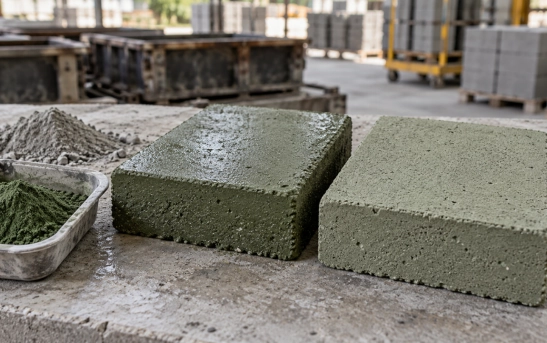
A wet green concrete paver may look noticeably darker than a dry reference sample. That difference alone is not a reason to change the pigment dosage. Before adjusting the mix, compare samples at the agreed curing age, with similar surface moisture and under the same lighting.
Cement color, aggregate, and surface finish also affect the appearance of iron oxide green concrete. Gray cement can mute the green, while a lighter base can make it appear brighter. This guide explains how to choose a trial dosage, keep test batches consistent, and evaluate the finished color before approving a mix for production.
What Makes Iron Oxide Green Concrete Look Different?
Cement changes the starting point. Gray cement tends to mute green. On pale cement, the shade reads differently. The iron oxide green pigment adds color, but the background still shows through.
Sand can warm a mix. Aggregate color matters too. Exposed grains catch light in patches; from a few steps back, a uniform green may look paler. Up close, it may just be texture.
How Should You Set an Iron Oxide Green Dosage?
Percentage based on what? Put the basis on the trial sheet. Cementitious mass and total batch mass aren't interchangeable. Sand and aggregate change the denominator; note it before comparing the numbers.
For 20 kg of cementitious material, a 3% trial comes to 0.6 kg pigment. Weigh it. No scoop by eye. The number is an example, not a production dose. Hold the rest of the mix steady while you compare.
|
Mix condition |
What you may see |
Note for the trial record |
|---|---|---|
|
Gray cement |
A deeper green |
Cement lot |
|
Wet aggregate |
Extra water in the batch |
Moisture |
|
Exposed finish |
Light breaks across the grain |
Finish |
Put the target panel beside the trial sheet. New cement lot? Compare it with the retained sample, not last month's memory. A lab batch narrows the options; the full-face paver shows whether the finish carries the shade in construction materials.
How Do You Run a Green Concrete Trial?
Before mixing, write the question down. Dose or grade? One per run. If the dose is under review, leave the cement alone. For a new grade, keep the recipe.
The batch card can be scrappy. Cementitious weight. Pigment weight. Cement lot. Aggregate after rain? Note it. Write down added water and mixing time. Mark the date and curing age on the sample itself. Not in a phone note you have to find later.
Cast a pair when practical. Save one as the clean reference. Handle the other or check it for a surface film. Flecks? Before adding more, check how the pigment went in. A pale face sends you back to the scale or cement background. It may be the percentage basis, too.
Rain on the aggregate pile can add water to the batch. Yesterday's dry pile and today's wet one may leave faces that dry differently. Note the change. For a grade check, keep the iron oxide pigments comparison in the same recipe.
How Do You Approve a Stable Green Concrete Color?
Color approval needs a routine. Not a complicated one. Let the test piece and accepted panel reach the agreed age. Dry them to a similar condition. Then put them side by side under the light used on the line. Same face, same angle. Warehouse door versus desk lamp? You'll argue about lighting instead of green.
Stand back a little. Check the face as a whole, then move in to the edge. Is the pale film in the mix or on top? Check the surface before calling it fading. If the paver still feels cool, leave it another day.
The phone photo can go in the batch record. Don't sign off from the screen; auto exposure shifts the image. Use the actual pavers for the call. Keep the approved one dry, with the mix and date on it. If the shade is close, save a second panel. Let one travel between shifts; leave its twin clean.
What Green Concrete Problems Should You Troubleshoot First?
Where's the mismatch? Edge to edge, or just one patch? A pale face sends you to the scale or cement background. Flecks send you to mixing. A light strip at one side may be finish or compaction.
An olive cast can start with warmer aggregate or cement. Put both beside the target. If the sample reads gray, confirm pigment weight. Check it dry, under the same light. Small checks can stop a shade complaint turning into a formula change too soon.
More pigment can darken the face. It won't smooth a streak. Keep the miss as your before sample and change one thing in the retest. If the recipe and finish match but the shade still misses, try another grade.
Discuss a Green Concrete Trial with the Right Mix Notes
Keep the batch notes with the panel. Cement lot. Aggregate condition. Pigment basis and weight. Mixing order. Cure age. Finish. It is a short record, but without it the color conversation starts again.
If you're still off after the process checks, send us your cured panel details with the batch notes. We'll talk through the shade in the application you're making.
FAQ
Can gray cement dull iron oxide green?
Set the same trial on gray and pale cement and the difference is easy to see: gray usually pulls the green darker. Hold the aggregate and finish steady or the comparison gets muddy.
Should I add pigment when concrete is streaked?
Not yet. A heavier dose can darken the whole face without evening out a stripe. Check the scale and mixing; change one part of the trial at a time.
How long before I approve a sample?
Wait for the agreed cure age. Let the new panel and retained piece dry under similar conditions, then compare the same face under the line light. A photo is handy for notes; auto exposure can shift its color.
Will a paver match precast concrete?
It might. A smooth paver and a grainy precast face do not return light the same way. Keep a full-face sample for each finish before you call the shade approved.